Democrats seize 14 state seats in West Virginia election night sweep
Gains in the House of Delegates and State Senate signal a shift in local politics despite Republican holds on federal races.
By Beatriz Soto ·
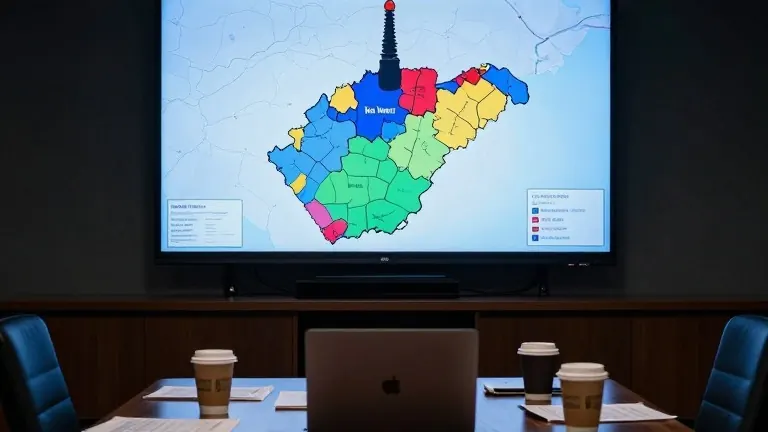
Democrats captured 14 state legislative seats in West Virginia on Tuesday, reversing a years-long trend of losses in the state legislature. The party added 12 members to the House of Delegates and two members to the State Senate. These gains bring the Democratic caucus to 21 seats in the House and four seats in the Senate.
The results mark a sharp reversal for West Virginia Democrats, who had been losing ground in previous cycles. While Republicans maintain supermajorities in both chambers, the Democratic party has halted its decline. Mike Pushkin, the state party chair, stated that recruitment efforts for the 2028 cycle began the day after the election.
Federal races also showed erosion in Republican voting margins. Senator Shelley Moore Capito won the U.S. Senate race with 58 percent of the vote. This result is 12 percentage points lower than her margin from six years ago. Representative Carol Miller, who serves the First District, received 66 percent of the vote in 2024 but finished nine percentage points below that figure on Tuesday.
Representative Riley Moore won his reelection bid in the Second District with 59 percent of the vote. Two years ago, he secured 71 percent of the total. These shifts indicate a national Democratic wave that crossed state lines, even as West Virginia remained a heavily red state in federal contests.
Voter registration data continues to favor Republicans. Currently, 44 percent of registered voters are Republicans, compared to 27 percent who are Democrats. Independents make up 25 percent of the registered electorate. This registration gap means Republicans hold a structural advantage in general elections.
Greg Thomas, a veteran Republican consultant in the state, described the outcome as a pendulum swinging back against the party. He noted that the state GOP needed to return to the issues and candidate types that drove success 10 to 15 years ago. Thomas suggested that reopening primaries to Independent voters could address the alienation caused by the current closed primary system.
The state Republican Party now faces an internal debate over its direction. For the last decade, the party benefited from alignment with the Trump and MAGA movements. With that momentum fading, leadership must decide whether to continue that path or pivot toward a different strategy.