Foggy weather traps hazardous air pollution in English cities
Eleven monitoring sites hit the top of the pollution scale on Monday as windless conditions prevented emissions from dispersing.
By Beatriz Soto ·
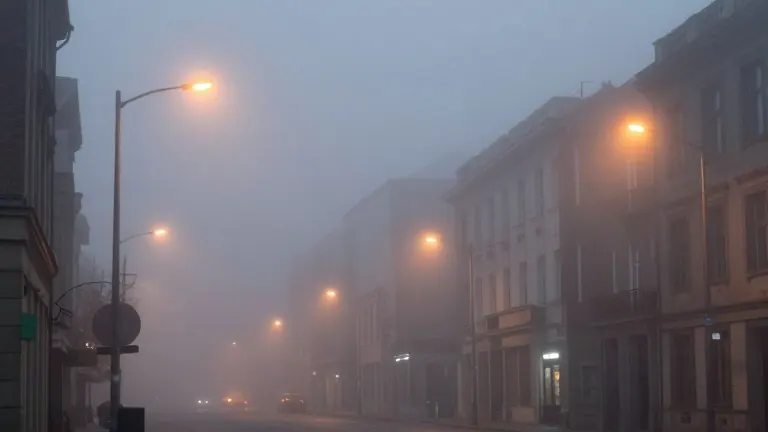
The air in English cities turned dangerous on Monday.
Stagnant weather conditions trapped emissions from recent weekend celebrations near the ground. Fog and a lack of wind stopped pollutants from moving away, causing them to pile up in major metropolitan areas.
Government data showed that eleven monitoring stations reached the maximum level on the ten-point particulate matter index during the twenty-four-hour period ending at 10 a.m. Most of these sites were located in London and Greater Manchester. Another twenty-seven stations recorded high levels across the capital, the north-west, the Midlands, Yorkshire, and the east of England.
Hillingdon in west London recorded the highest concentration of fine particles. The twenty-four-hour average for PM2.5 reached 129 micrograms per cubic metre. This figure is more than eight times the daily guideline set by the World Health Organization. In the north-west, monitoring points at Manchester Piccadilly, Wigan, Blackburn, Preston, and Rochdale also registered very high readings.
Jane Burston, chief executive of the Clean Air Fund, said the timing points to autumn festivities. She explained that the still air and fog created a trap for smoke from fireworks, bonfires, and Diwali events. Burston warned that residents in the worst-affected areas are breathing particles at concentrations five to ten times above normal annual levels.
She called for better forecasting and clearer health alerts. Burston argued that lower baseline pollution throughout the year would prevent seasonal spikes from reaching such extreme heights. She stated that the current conditions pose risks to everyone, not just people with pre-existing respiratory conditions.
Larissa Lockwood, director of campaigns at Global Action Plan, said the high levels were expected given seasonal activities. She noted that log burners, bonfires, and fireworks add to the usual emissions from transport and industry. Because the fog prevents dispersion, these pollutants remain concentrated in urban centers. Lockwood urged officials to launch a public health campaign and issue specific burn alerts.
A spokesperson for the mayor of London confirmed a high air pollution alert for Tuesday, November 10. This decision followed advice from forecasters at Imperial College London. The alert noted that levels rose sharply from Friday to Sunday and stayed elevated into Monday morning. A spokesperson for Clean Air Greater Manchester said higher particulate levels are a recurring annual event around Bonfire Night. They added that light winds and fog this year made the accumulation worse. The government was contacted for comment.