Gambia's Blind Magistrate Presides Over 1,000 Cases in Non-Accessible Court
Despite a 2021 disability law, officials and advocates say institutions in Banjul still lack the infrastructure for independent participation.
By Isaac Medina ·
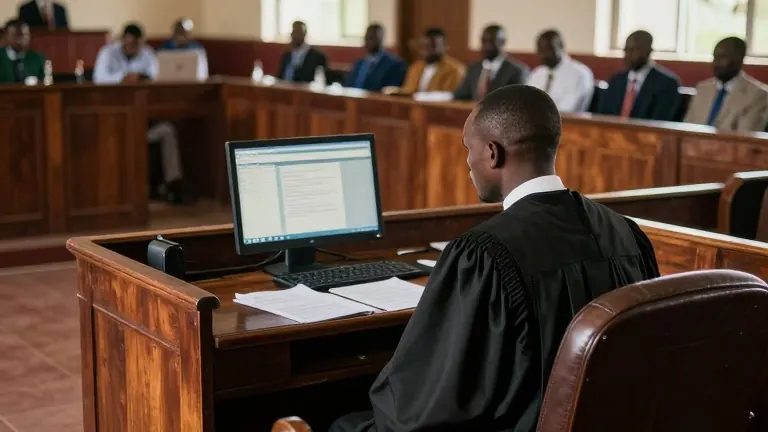
Magistrate Muhammed Krubally has presided over more than 1,000 civil and criminal cases in the Gambia. He is the country’s first visually impaired judge, a position he has held since 2016. At the Banjul Magistrates’ Court, he relies on a screen reader and smart glasses to hear proceedings, but the physical space was not built for him.
Krubally grew up as the second of nine children in the Central River Region. He attended a specialist school for blind children before moving to university, where he faced limited resources and skepticism from peers and teachers. He says their doubts strengthened his resolve to enter the judiciary to make the system inclusive.
In 2021, the Gambia passed the Persons with Disabilities Act. The law mandates accessibility, non-discrimination, and full participation in public life. However, the Ministry of Gender, Children and Social Welfare did not respond to inquiries about how the act is being implemented.
Lamin Colley, head of the GOVI Resource Centre for the Blind, says 49 pupils currently receive specialist education before moving to mainstream schools. He notes that a single special-needs teacher often covers too large a cluster of schools to maintain regular contact with all students. Colley attributes the lack of progress to insufficient government funding in the national budget.
Ndey Yassin Secka-Sallah, the Gambia’s only visually impaired parliamentarian, describes her experience in the National Assembly. She relied on colleagues to explain what was being discussed because the chamber was not accessible to her. She says implementation of the disability law remains a major challenge five years after its passage.
Musa Barrow, a media law lecturer, uses digital tools to prepare notes but faces questions from students about his ability to teach. He says technology has helped him work independently, but assumptions about his capabilities persist.
The judiciary did not respond to questions about the specific accommodations provided to Krubally or the accessibility measures in place for court users with disabilities. The 2013 census recorded a disability prevalence of 1.2 percent, but the 2024 census results lacked detailed disability data.
Krubally now mentors young people, including Modou Lamin Dampha. He continues to use JAWS software and AI-enabled glasses to manage his docket. The system around him has not formally changed, but Krubally says he sees only possibility.