NATO Shifts to Deep Strike Doctrine
Allies plan to target Russian military infrastructure behind the front line to prevent escalation, marking a departure from defensive barriers.
By Isaac Medina ·
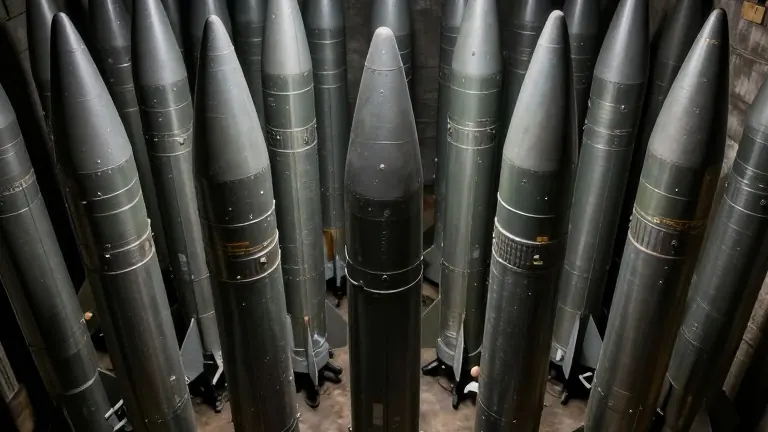
NATO is developing a new defence strategy that authorizes conventional strikes deep inside Russian territory. The plan moves away from decades of reliance on barriers and checkpoints on the eastern flank. Instead, the alliance intends to hit military bases, supply depots, and industrial facilities behind the front line.
The shift follows nearly five years of war in Ukraine. NATO strategists concluded that impeding troop advances is no longer sufficient to stop a potential Russian invasion. The new approach focuses on active prevention, or military denial. This method requires dismantling the enemy's ability to sustain an offensive before it fully develops.
Supreme Allied Commander Europe Alexus Grynkewich outlined this logic in his 'theory of victory.' He stated that the Allies will block the initial wave of attack and then strike everything that supports the advancing force. 'We will break the warfighting system engaged against us by hitting both advancing forces and anything and everything that supports, sustains or controls that force,' Grynkewich said.
The strategy mirrors tactics Ukraine has already employed. Kyiv uses long-range drones and missiles to target Russian oil refineries, drone factories, and fuel depots. Alyona Getmanchuk, Ukraine's Ambassador to NATO, compared air defence to a painkiller at a recent conference. She noted that while it alleviates symptoms, the source of the pain must be targeted.
Polish Major General Ireneusz Nowak emphasized that defence now requires striking back. He argued that the alliance must treat deep precision strikes as a deterrent. 'We definitely would want to strike the defense-industrial base in a fight with Russia,' Nowak said. He added that the message to Moscow must be clear: 'Don't do anything stupid, because we can punish you. But to be credible, we need to have those capabilities.'
To execute this doctrine, the United States is modernizing stocks of Tomahawk cruise missiles and ATACMS ballistic missiles. European partners are expanding their own arsenals with Storm Shadow and Taurus cruise missiles. They are also developing new, low-cost long-range strike systems. Fabian Hoffmann, a senior researcher at the Norwegian Institute for Defence Studies, noted that at least 48 European projects for such missiles have been announced.
The new plan does not include a transition to nuclear weapons. It remains a conventional framework. Hoffmann observed that no nation wants to enter a high-intensity conflict without matching the adversary's long-range strike capabilities. The alliance aims to ensure it possesses these tools before any future engagement begins.