Salmon Scarcity Fuels Alaska Senate Battle
Indigenous voters in western Alaska are turning declining fish runs into a central issue against Republican incumbent Dan Sullivan.
By Isaac Medina ·
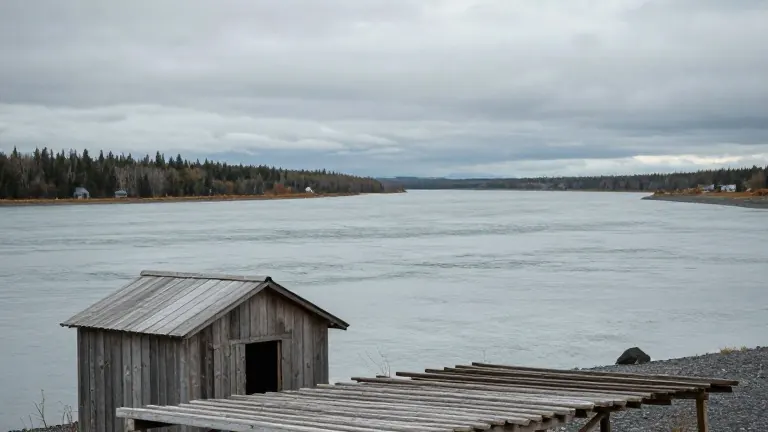
Alaska's U.S. Senate race has centered on the declining population of salmon, a resource that sustains many families in the state. The dispute has become a focal point for voters in remote western communities where the fish are disappearing.
Evon Waska, who lives near the Kuskokwim River, says his drying racks remain empty in a year when too few salmon return from the Bering Sea. Government agencies have closed the river to fishing to conserve the population, a move that affects residents who rely on the catch to feed their households.
Waska blames industrial trawlers operating miles offshore for the decline. He notes that regulators restrict local fishermen while leaving large fishing vessels active. "They don't close the trawlers. They close me and my people first," Waska said.
The trawling industry, valued at $1 billion and largely based in Seattle, uses large nets to harvest pollock. These nets often catch king salmon and other species by accident, a waste known as bycatch. Pollock is processed into imitation crab, including the variety sold in fast-food chains.
Republican Senator Dan Sullivan, who has supported the pollock industry, introduced a new bill to address the issue. Sullivan called it the most comprehensive bycatch legislation ever written to reduce accidental catches and protect seafloor habitat.
Democratic challenger Mary Peltola, an Indigenous candidate from the Kuskokwim region, argues that Sullivan's bill is a late-stage political maneuver. She stated that Sullivan accepted over $300,000 from trawlers before proposing a solution. "Dan Sullivan reeled in over $300,000 from trawlers and waited until the 11th hour for a half-hearted and half-baked solution," Peltola said. She proposes banning factory trawlers, the largest vessels in the pollock fleet.
Heather Mann, who leads a trawlers association, disputes the idea that the industry is the primary cause of the salmon decline. She said science shows that eliminating pollock fishing would have a minimal impact on restoring salmon runs. Trawlers reported catching 40,000 Alaska salmon this year, a small fraction of their total pollock harvest.
In the village of Kwethluk, the lack of fish is affecting the local economy and culture. Tribal president Mary Nikolai pointed to unused smokehouses during the summer. "Most of the smokehouses are like this. And it's like a slow trend of closing our workforce out," Nikolai said. The close race has drawn national attention to the struggle of subsistence fishermen in western Alaska.