UAE Adviser Says Military Options Fail to Resolve Iran Conflict
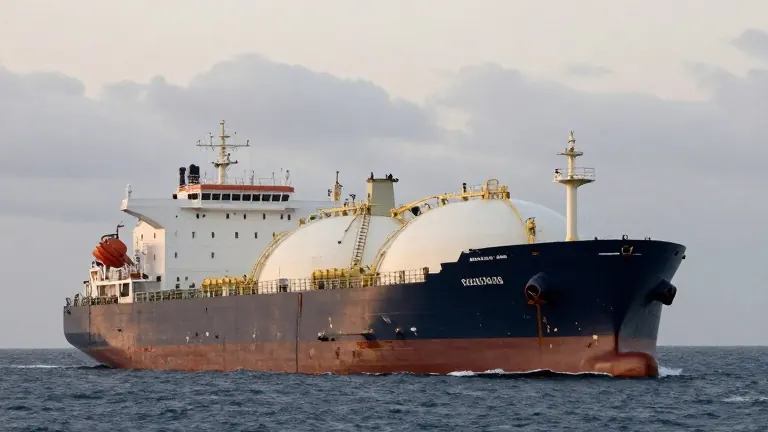
At the Manama Dialogue, regional leaders argued that diplomacy is the only viable path forward as negotiators meet in Qatar to address the Strait of Hormuz.
By Beatriz Soto ·
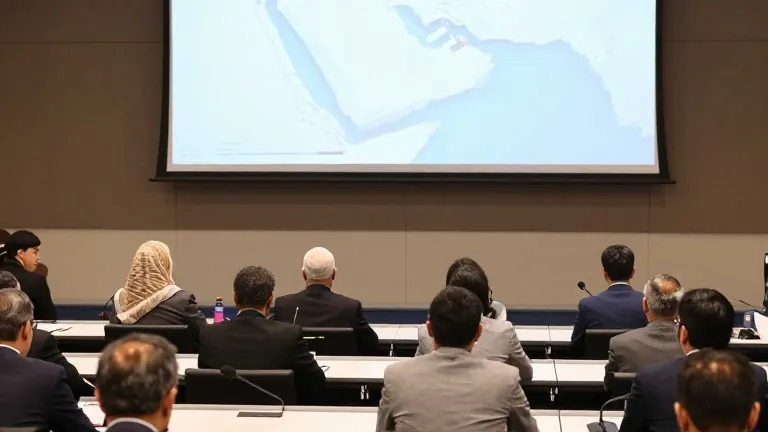
The conflict that began in late February has transformed the security posture of the Persian Gulf region. At the Manama Dialogue in Bahrain, UAE presidential adviser Anwar Gargash stated on Sunday that military solutions will not provide quick exits from the current crisis with Iran.
Gargash addressed the annual security summit organized by the International Institute for Strategic Studies, where he described the year as a watershed moment for global stability. He emphasized that political tools are the primary instruments needed to resolve the standoff, arguing that military action would only complicate an already difficult situation. While acknowledging that the positions of the United States and Iran are far apart, he warned that failing to bridge these gaps could lead to the worst outcomes.
Diplomatic efforts are currently focused in Qatar. Iranian Foreign Minister Abbas Araghchi confirmed that negotiators are reviewing a proposal aimed at reopening the Strait of Hormuz. Araghchi noted that no direct talks are occurring with Washington and that the final outcome depends on the United States' responses to specific Iranian questions. He expressed hope that the U.S. would choose diplomacy over other paths, while stating that Iran is prepared for both defense and negotiation depending on Washington's rationality.
The shadow of potential escalation weighed heavily on the three-day forum. Egypt’s Foreign Minister Badr Abdelatty warned that a second round of confrontation would be more destructive and lead nowhere. Gargash echoed this sentiment, stating that another round of war is not in the interest of the region or Iran, though he conceded that the region is braced for the possibility of renewed conflict.
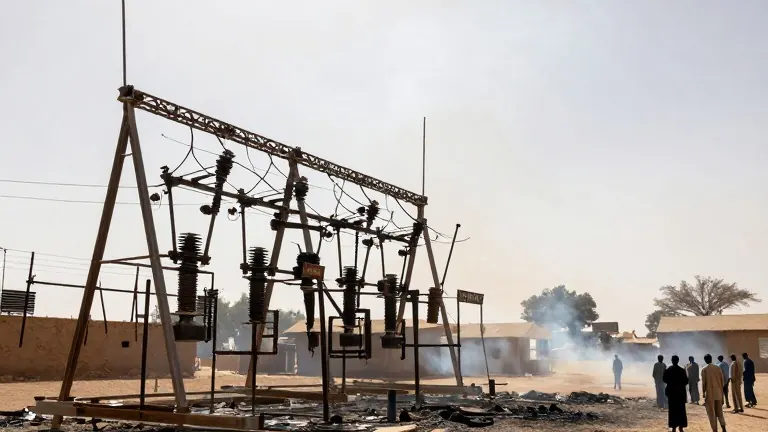
The current crisis followed a ceasefire reached in April. Before that truce, the UAE faced more than 3,000 drone and ballistic missile attacks targeting airports, military installations, and oil facilities. According to the IISS, most of these were intercepted. Since the fighting began, Gulf nations have spent billions of dollars to strengthen their defense capabilities.
Bahraini Foreign Affairs Minister Abdullatif bin Rashid Al Zayani highlighted a pattern of Iranian attacks targeting sea, air, and data facilities. He pointed out that Iran fired 500 drones and nearly 200 ballistic missiles at Bahrain, which hosts the U.S. Navy's 5th Fleet, during the height of the war. These strikes hit the naval base, residential buildings, the financial district, and a water desalination plant. Al Zayani also cited recent Houthi attacks on Saudi Arabia as part of this continued pattern.
A major concern at the forum was the lack of a coordinated defense response among the six-member Gulf Cooperation Council. Gargash offered a candid criticism of this fragmentation, stating that while individual states have risen to the challenge independently, the region has not collectively met the demands of this critical crisis.