AI Tel Aviv Blast Image and Military Dispute Frame Israel's Tuesday Vote
Netanyahu links his reelection to preventing a second Holocaust, while a report of friction with the IDF chief of staff complicates the final campaign push.
By Beatriz Soto ·
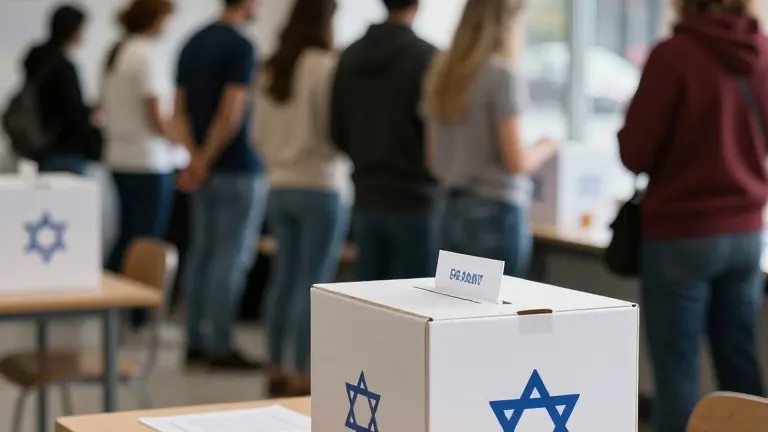
Prime Minister Benjamin Netanyahu shared an AI-generated image of a nuclear explosion over Tel Aviv on Sunday, a move designed to cement his claim that he alone can prevent an Iranian-inflicted second Holocaust. The visual campaign strategy coincides with Israeli voters heading to the polls on Tuesday, October 27, to determine the next government.
The final days of the campaign have centered on trust in Netanyahu’s judgment regarding the Iranian threat. On Sunday, the N12 News site reported a confrontation between the prime minister and IDF Chief of Staff Lt. Gen. Eyal Zamir. According to the report, Zamir resisted an instruction for an undisclosed military operation that defense officials feared could trigger a broader confrontation with Iran. Zamir reportedly sought further deliberations and signed documentation concerning the legal authorization of the action.
Netanyahu denied any tension with the military’s top brass over Iran. However, the report provided opposition leaders with a specific example to challenge the prime minister’s claim of indispensability. The change bloc argues that Netanyahu can no longer be trusted to distinguish between national security needs and his own political survival. They point to the alleged military friction as evidence that institutional checks on the prime minister are functioning.
The credibility of the N12 report is a key factor in the final voting calculations. For some voters, the account serves as proof that military professionals are attempting to restrain a prime minister whose political considerations may be shaping security decisions. For others, it appears to be another anonymously sourced story released at a strategically damaging time, similar to the previously contradicted report that Egyptian intelligence chief Abbas Kamel visited Israel before the October 7 attacks to warn of an attack.
The shadow of October 7 complicates the trust equation for both sides. The military and intelligence establishments failed in their assessments and preparations leading up to that day, which undermines the automatic deference voters might otherwise grant to military judgment. Conversely, Netanyahu was prime minister on October 7 and bore ultimate political responsibility for the country’s security. The disaster damaged confidence in both the political leadership and the security establishment.
Netanyahu is asking voters to trust his experience and international standing to confront the Iranian danger. His opponents argue that his handling of the threat demonstrates why he must go. The election will determine which coalition holds power, but the competing arguments over Iran have sharpened the choice regarding whose judgment and motives voters are willing to credit.