Breaking: Anthropic IPO Math: Trillion Valuation vs. 500 Billion Deficit
The company projects a value near 3 trillion dollars despite losing 500 billion dollars annually, while facing 900 billion dollars in compute commitments to Amazon and Google.
By Beatriz Soto ·
Anthropic is preparing to file for an initial public offering that targets a valuation between 2.5 trillion dollars and 3 trillion dollars. This projected market value stands in stark contrast to the company's current financial performance, which includes an annual revenue of under 20 billion dollars. The core of this financial structure rests on a massive deficit of approximately 500 billion dollars. This gap between the projected valuation and the actual revenue forms the central question of the upcoming listing. Investors are being asked to value the company based on future potential rather than current earnings power.
The company carries significant liabilities in the form of compute commitments to other major technology firms. Anthropic has locked in deals with Amazon and Google that total up to 900 billion dollars. These commitments represent a substantial portion of the capital that will be raised through the public offering. The money will not go toward reducing the current operating deficit directly but will be used to fulfill these long term infrastructure agreements. This means that a large share of the public investment is earmarked for external hardware and service contracts.
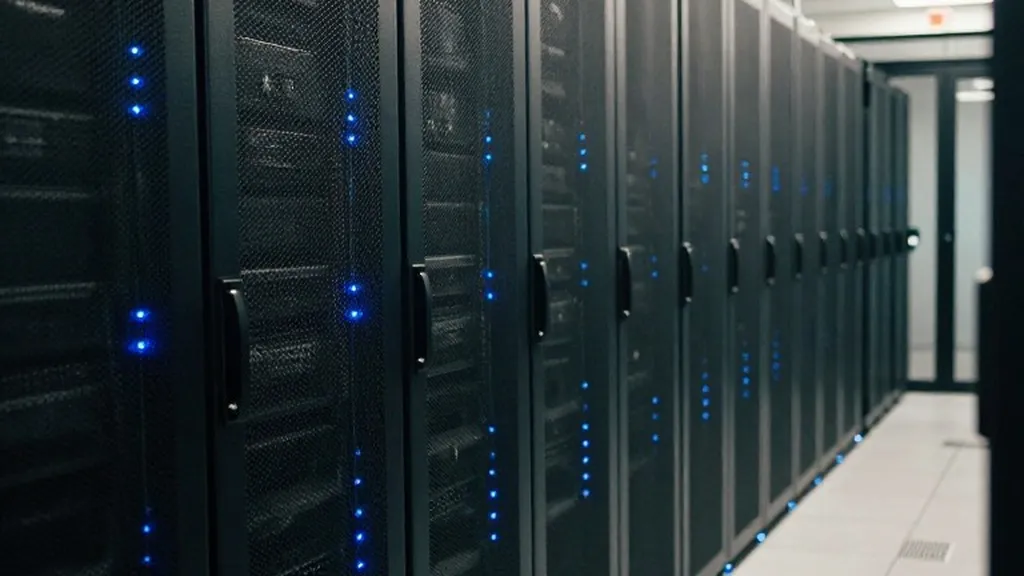
The economics of the underlying hardware further illustrate the scale of the operation. A single Nvidia RTX Pro 6000 graphics card can support approximately 15 to 20 light users running at 60 to 70 tokens per second. Alternatively, it can support 1 to 2 heavy coding users running Claude Code at 40 to 50 tokens per second, assuming constant use for 24 hours a day. The retail price for one of these cards is 20,000 dollars, a figure that excludes the cost of servers, switches, CPUs, data center facilities, and electricity.
For the consumer, the cost recovery period is lengthy. A heavy user on the max plan pays 200 dollars a month, while a light user pays an average of 20 dollars a month. If the company buys the cards directly from Nvidia at a wholesale price of 3,000 to 4,000 dollars, the GPU alone takes about 10 months of a heavy user’s payments to pay back. The same time frame applies to the 15 to 20 light users paying 20 dollars a month. Most light users do not use the service for more than a few hours a day, which stretches the bandwidth numbers by a factor of 10, yet the acquisition cost remains a significant burden for the infrastructure provider.
Nvidia, the primary supplier of these graphics cards, has moved to consolidate control over the ecosystem. The company agreed to acquire Hugging Face, the platform where most open AI models are distributed, for 12.9 billion dollars. Hugging Face generates between 150 and 200 million dollars a year in its peak years, making the acquisition price approximately 70 times its revenue. The stated reason for the purchase was control over CUDA, the software that runs the models, but the deeper motive was control over model distribution.
This move came as the open source market was being flooded with advanced Chinese models. Companies like Moonshot AI, Alibaba, and Xiaomi were releasing capable models such as Kimi and Qwen to the public. Kimi K3 began to outperform the Opus 5 models from Anthropic and was made freely available. Developers quantized these models to run on smaller machines like Mac Studios and RTX cards. After Nvidia acquired Hugging Face, advanced models were deleted from the platform. Any model over a quant 4 level, which were capable of beating Claude’s models, was removed. The 4 bit, 6 bit, 8 bit, and 16 bit full sized models were banned from the site.
Developers rallied to counter this move and created a new platform called Pirate Face to host the models. However, the largest files, which were 400 gigabytes or larger at quant 3 and higher, were scrubbed from the network before they could be fully migrated. This event highlighted the tension between open distribution and corporate control of the AI infrastructure.
In the regulatory arena, Anthropic has sought to influence government policy to protect its market position. The company demanded that Congress ban Chinese models citing national security concerns. This push coincided with a publicity stunt involving media reports that AI would take over the world, circulated after disgruntled employee Jacob Coxon quit the company. The strategy aimed to generate public panic to support legislative action. Congress passed a bill banning any government and its affiliates from using Chinese models. Anthropic is also working to pass bills that would stop other companies, such as Verizon, from launching their own in-house AI models using advanced open source software.
The regulatory environment also led to the temporary suspension of Anthropic’s latest releases. The company released Fable 5 and Mythos 5 on June 9, 2026. On June 12, 2026, the U.S. Department of Commerce issued an export control directive. Anthropic suspended access to these models worldwide following the directive. The models were solving problems at a rate that prompted the pullback, signaling a shift from competing for speed to controlling the pace of the technology’s release.
User experiences have also become a point of friction in recent months. Anthropic has been suspending accounts for reasons such as abuse, potential fraud, and usage violations. The appeal process is conducted entirely by bots, and accounts are often not reactivated after a suspension. Critics argue that once the company goes public, these suspensions will multiply significantly because the firm will have deep pockets and access to unlimited funds. The end user is seen as less important in this financial model. Anthropic does not generate significant profit from daily users, nor does it make substantial money from heavy users.