Families Search Spain Wreckage For Missing
Two days after the collision killed 69, relatives are posting seat numbers and photos while search teams with dogs continue working.
By Beatriz Soto ·
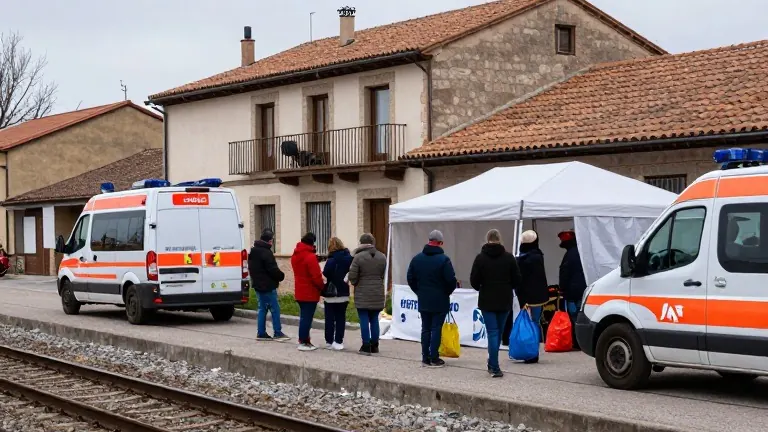
Families are still searching for missing relatives two days after two high-speed trains collided in central Spain.
At least 69 people died and 180 were injured in the Wednesday crash near Urda, a town of about 2,500 people south of Madrid. Of those hurt, 110 were taken to hospitals, prompting regional authorities to request blood donations. Castilla-La Mancha, the region where the collision occurred, recorded more than 2,000 volunteers who stepped forward afterward. Region president Emiliano García-Page thanked the people who donated and the 1,300 emergency service personnel mobilized for the response.
The RENFE train involved struck an Iryo service that had stopped on the tracks. César Vicente, an actor, traveled 495 kilometers from Seville to Toledo to look for his father, who held seat 13A on the RENFE train. Vicente spent the night at a religious center that was opened as a base for families affected by the disaster, alongside his mother and his aunt. "I have my father, and I don't know where he is. I hope to find him, oh my Lord," he said.
Search teams with sniffer dogs were still working Thursday. Relatives have posted online asking for help locating family members, including details such as the clothes they wore, their physical description, and the seat or car where they were traveling. Alejandra Marroquín wrote on Instagram that her sister Adriana was in car 8 of the RENFE train wearing dark blue clothing and that the family had not reached her. "We're still praying, we don't know anything," Marroquín said Thursday morning.
In Urda, residents drove the unharmed passengers from the tracks to a nearby sports pavilion, made sandwiches for them, and helped treat the injured. David Gómez, a construction worker who was working nearby with his brother and a colleague, said they heard the crash and ran toward it. "People were trying to get out through the windows .. We cut through some fences to access the area and treated people with the first-aid kits we had brought until emergency services arrived," Gómez told El País.
Spanish Prime Minister Pedro Sánchez told reporters Thursday morning that the government was working to respond to the victims' families and to determine what happened. Spain's high-speed rail network is the world's second largest, after China's, and had not recorded a fatal crash in the more than three decades it has been in service before this year. In January, 46 people died when one train left the track and hit another traveling the opposite direction in southern Spain.