Gambia Judge Presides With Screen Reader
A blind magistrate in Banjul handles over 1,000 cases while advocates say the court system has not fully adapted to the 2021 disability law.
By Isaac Medina ·
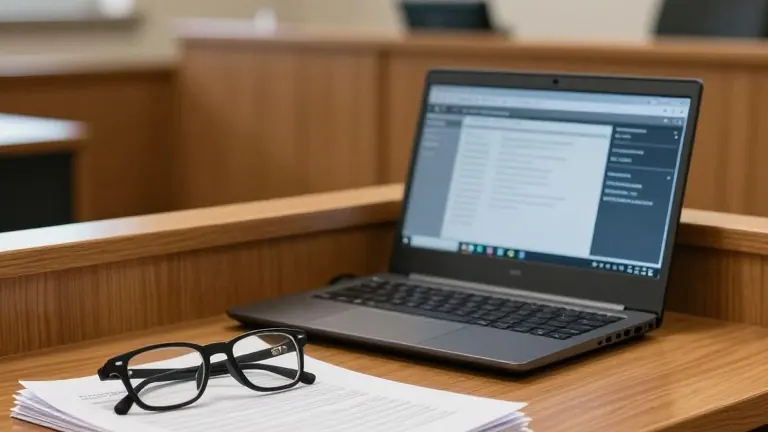
Magistrate Muhammed Krubally uses a screen reader to hear legal documents as he presides over criminal cases in Banjul.
Krubally, 41, arrived at the Banjul Magistrates' Court early on a recent working day. His clerk walked him through the day's files before the first hearing began. He entered the packed courtroom to hear lawyers, witnesses, and relatives. Although he cannot see the people before him, he tracks the rhythm of the proceedings by following voices and remembering specific details. A software program called JAWS reads judgments aloud to him. He also relies on artificial intelligence enabled smart glasses to complete tasks independently.
Krubally has served on the bench since 2016. He states that he has handled more than 1,000 civil and criminal cases. The Gambia Organisation of the Visually Impaired confirms he is the country's first visually impaired magistrate. He views his role as a profession rather than an experiment. He grew up in the Central River Region as the second of nine children. He pursued law to defend his rights and to represent people with disabilities. He faced limited resources and discouragement from classmates and teachers during his education.
The Gambia enacted the Persons with Disabilities Act in 2021. The law outlines principles of non-discrimination, equality of opportunity, and accessibility. It includes provisions for employment, public buildings, information, and access to justice. The National Human Rights Commission has identified continuing barriers to services, education, and jobs. The Ministry of Gender, Children and Social Welfare did not respond to questions regarding implementation of the law.
Educational institutions report persistent gaps. Lamin Colley, head of the GOVI Resource Centre for the Blind, said the school currently teaches 49 pupils aged four to 14. These students later move into mainstream schools. Special needs teachers assigned to school clusters are meant to support them. Colley stated that limited learning materials and large cluster sizes stretch teacher support thin. He cited insufficient government funding in the national budget as a partial cause for the lack of progress since the act was passed.
Parliamentary and academic figures describe similar challenges. Ndey Yassin Secka-Sallah, the country's only visually impaired parliamentarian, said she relies on colleagues to know what is being discussed in the National Assembly. She expressed a desire for greater independence. Musa Barrow, a media law and ethics instructor, uses digital tools to prepare lectures. Some journalism students have questioned his ability to meet their standards. Barrow replied that he can do more than what sighted people can do.
The 2013 census recorded a disability prevalence of 1.2 percent, or 21,873 people. That figure may understate reality because the census used a narrower set of questions than the Washington Group functional difficulty measures. Preliminary results from a newer census released in September 2024 did not include detailed national disability data. The judiciary did not respond to questions about accommodations for Krubally or changes made since the 2021 law.
Krubally currently mentors young people, including Modou Lamin Dampha, who said the magistrate encourages him to continue. Krubally stated that he sees possibility in his work.