Lula Turns Two Point Deficit Into Victory
A two-hour extension of voting hours, ordered by a judge with ties to the incumbent, is the centerpiece of a legal challenge filed by the defeated candidate.
By Beatriz Soto ·
Luiz Inácio Lula da Silva secured 64.2 million votes to win his fourth term as president of Brazil, defeating Flávio Bolsonaro by a margin of more than four million ballots. The incumbent received 51.79 percent of the vote, while his opponent captured 48.21 percent. This result reversed a two-point deficit Lula held in the first round of the election, which took place on October 4.
Polls during the campaign consistently showed a statistical tie, failing to predict a final gap of nearly four points. That margin exceeded the difference Lula achieved when he defeated Jair Bolsonaro in 2022. The shift occurred despite a legislative election victory by the right wing, which created a political environment that many analysts considered unfavorable to the incumbent.
Lula, who is approaching his 81st birthday, framed the campaign as a contest between democratic governance and authoritarianism. Jair Bolsonaro, the patriarch of the opposing family, is currently serving a 27-year prison sentence for planning a coup to remain in power after losing in 2022. In his victory speech, Lula credited young voters for taking to the streets to protect democracy and older citizens for turning out in high numbers. He described the election as a rejection of external influence, specifically citing the presidency of Donald Trump.
Flávio Bolsonaro rejected the outcome immediately after the results were announced. He stated that his team would seek the annulment of the election in the courts. The primary grievance centers on a judicial order that extended voting hours by two hours nationwide. The order came from Supreme Court Justice Cristiano Zanin, who previously served as Lula’s lawyer. The directive was issued one minute after the standard closing time for polling stations.
The late notice caused logistical chaos. Many polling stations did not receive the instruction in time and closed at their regular hours. The Workers' Party, Lula’s political group, argued that the extension benefited poorer voters who tend to support the left. They noted that free public bus services, mandated by the court to facilitate voting, were insufficient in cities controlled by the right. Kassio Nunes Marques, president of the Superior Electoral Court, said the delay caused technical, operational, and security difficulties.
Flávio Bolsonaro called the process "unacceptable" and a "total violation of the right to equality." In a press statement in Brasilia, he remarked that the rules of the game were changed by Lula’s allies in the Supreme Court. Despite the challenge, Hugo Motta and Davi Alcolumbre, the leaders of the Chamber of Deputies and the Senate respectively, recognized Lula’s victory. Both officials are political allies of the president.
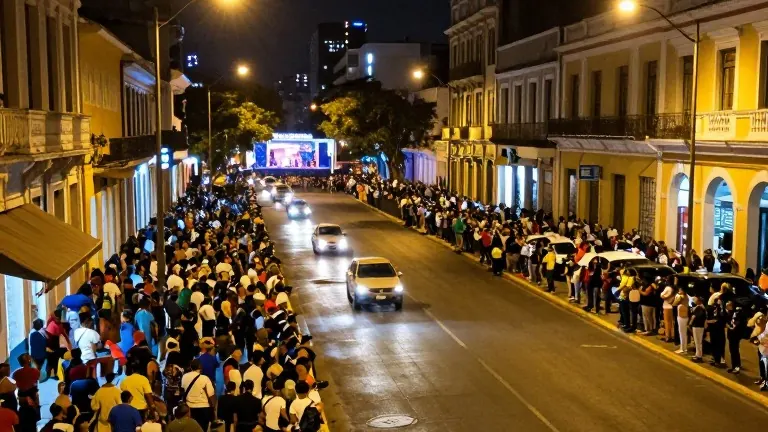
Celebrations erupted across Brazil, with the largest gathering in São Paulo. Tens of thousands of people assembled on Avenida Paulista, where Lula addressed the crowd. The size of the rally exceeded the celebrations from four years prior. Lula must now navigate a Congress that is the most right-leaning in the country’s history, a dynamic that will shape the negotiations for his next four years.