Maryland faces $3 billion deficit as Wes Moore begins second term
Governor Wes Moore won reelection and a key ballot measure, but he acknowledged a structural budget gap that will define his next two years.
By Beatriz Soto ·
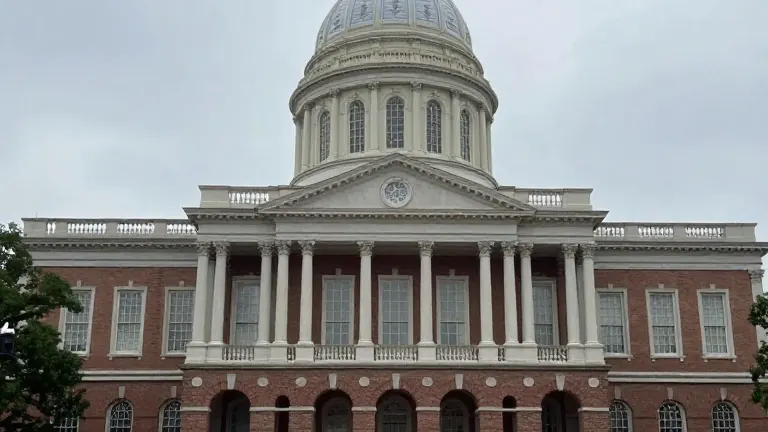
Maryland residents will face a $3 billion structural budget shortfall in the next legislative session, according to Governor Wes Moore. The governor confirmed the gap during a press conference in Annapolis on Wednesday morning, shortly after the Associated Press declared him the winner over Republican challenger Dan Cox. This financial reality sets the stage for the start of his second term.
Moore highlighted the passage of Question 3 as a major legislative win for the state. The ballot measure removes the requirement for congressional districts to be compact and contiguous. Moore stated that the amendment passed in a loud and resounding fashion, noting that many observers believed the measure was doomed just two weeks prior. He said the state is now prepared to engage immediately with General Assembly leadership to draft a new congressional map.
The governor defended the amendment as a necessary counter to nationwide redistricting efforts led by President Donald Trump and Republican lawmakers in other states. Moore pushed back against claims that the change was designed solely to protect the state's lone Republican-held congressional seat. He described the current situation in Washington as a power grab that Maryland cannot ignore while maintaining fair and representative districts.
Regarding the budget, Moore declined to say whether tax or fee increases are off the table. He emphasized a commitment to affordability and protecting the state's economic standing. Moore noted that Maryland has maintained a balanced budget for four straight years, a feat he credits to middle-class and veteran tax cuts enacted during his first term. He expressed confidence that the state can continue to invest in the future while remaining fiscally disciplined.
The governor also addressed concerns from small business owners and residents about high utility rates. He pointed to the state's Utility Relief Act and outlined an energy strategy that includes wind, solar, nuclear, and battery storage. Moore stated that this all-of-the-above approach is intended to make Maryland a net energy exporter. He positioned this strategy as a key part of his plan to manage costs for working families in the coming years.
Moore pointed to local executive victories and nine flipped municipal and county seats as evidence of a strong Democratic mandate across the state. He said the party started the election cycle with no institutional backing but with audacious goals to rethink its movement. Moore declared that the days of a governor having no coattails are over, citing the expanded Democratic coalition now in control of various local offices.