Oberlin art professor's child faces murder charges in double shooting
Asia Nguyen-Duy is held on a $3 million bond after being accused of killing Pipo Nguyen-Duy and Tran Thi Nam Phong in their home near campus.
By Isaac Medina ·
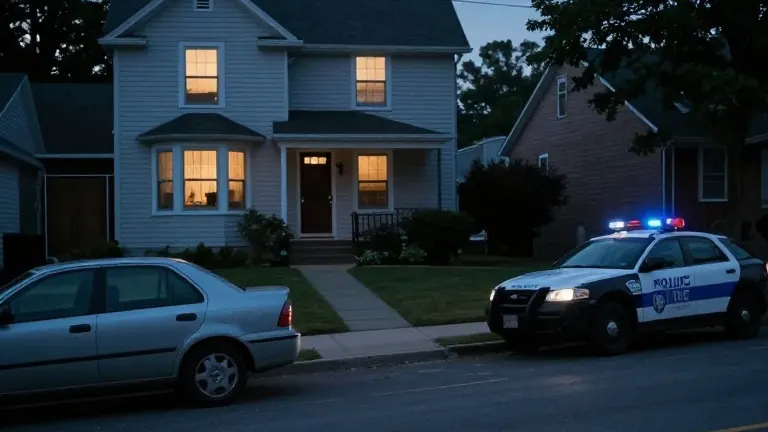
Asia Nguyen-Duy, the 31-year-old child of Oberlin College professor Pipo Nguyen-Duy, stands accused of killing his father and stepmother in their home. The suspect was arraigned in Oberlin Municipal Court on Thursday and charged with murder, felonious assault, and tampering with evidence. A bond of $3 million has been set to keep the suspect in custody while the case moves through the court system.
Police found the bodies of Pipo Nguyen-Duy, 64, and his wife, Tran Thi Nam Phong, 56, shot inside their residence a few blocks from the campus on Wednesday. Nguyen-Duy, a studio art and photography professor, was located on the first floor, while Phong was found on the second floor. Authorities had previously identified the suspect through a vehicle that was set on fire near the college’s conservatory of music, which led investigators to the crime scene.
The suspect, who identifies as gender neutral and uses the name Asia Nguyen-Duy, was initially carried into the courtroom with a bloodied and tattooed face before being wheeled in on a chair. Court records indicate the suspect was previously known as Daniel Jones, a name listed on identification found in the burned car. No official motive has been released by investigators at this time.
Oberlin City Prosecutor Zachary Simonoff informed Judge Farah Emeka that the accused provided a confession and directed police to the victim's address. Simonoff also stated that the suspect’s mother contacted police to report that her child was currently psychotic and required medication. A message regarding this condition was subsequently left with Asia Nguyen-Duy’s legal representative.
The case has been transferred to the Lorain County Common Pleas Court, where it will proceed to a grand jury. The suspect remains in the Lorain County Jail. The deaths have disrupted the campus environment just as students returned from fall break. Studio art classes were paused or modified, and an exhibit of the professor’s photography was installed in the campus art museum to serve as a gathering place for the community.
Oberlin College President Carmen Twillie Ambar described the event as a deeply challenging moment for the institution. In an open letter, she expressed concern over the impact of losing Nguyen-Duy to the community. The Guggenheim Foundation, which named Nguyen-Duy a photography fellow in 2011, also issued a tribute noting his 1975 immigration from Vietnam and his academic background from Carleton College and the University of New Mexico.
Digital forums for condolences have been established by Oberlin and regional partners, including the Museum of Contemporary Art Cleveland. A memorial tribute for Nguyen-Duy, who joined the faculty in 1998, is also being organized. The foundation’s statement highlighted themes in his work, such as immigration, intimacy, and the cost of war.