Pirate History: Jones Beach Namesake Linked to 1695 Heist
New research suggests the man who gave his name to New York's most visited state park helped a notorious pirate crew evade capture after raiding a royal treasure ship.
By Beatriz Soto ·
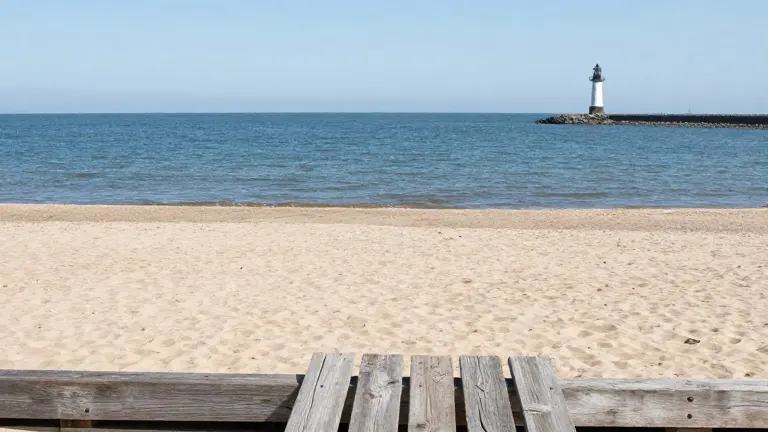
Tens of millions of dollars' worth of gold and silver changed hands in a violent 1695 raid on the Red Sea, an event that triggered the first worldwide manhunt for pirates. New research links a key figure in that heist to the namesake of a major New York State park. James Bailey, an amateur historian, states that colonial-era documents show Thomas Jones, the man for whom Jones Beach is named, served as a driver for the crew of Captain Henry Every after the raid on the Ganj-i-Sawai.
Bailey, who gained attention five years ago for discovering ancient coins tied to Every, has analyzed depositions and other records from the late 17th century. The documents indicate Jones was recruited to help the pirates escape authorities after they seized the royal vessel's cargo. The crew, known as the "King of the Pirates" and his associates, were accused of torturing, killing, and raping members of the ship's crew. While some pirates were captured and executed, Every and several others vanished, reportedly scattering to Europe and the American colonies.
Thomas Jones was a military officer and privateer who settled in Rhode Island before moving to New York. He became a wealthy landowner on Long Island, where he established a whaling operation. Jones Beach, located on a barrier island on Long Island, is the most visited state park in New York after Niagara Falls. Millions of people visit the park annually, according to Bailey, yet the connection between its namesake and the pirate world had remained largely unknown to the public.
Bailey noted that Jones' past was subject to local rumors long after his death in 1713. His mansion was described as haunted, and his grave was repeatedly dug up by treasure hunters. A family history published in 1906 by a descendant dismissed these stories as slander and improbable fictions. Thomas Floyd-Jones wrote that myths about Jones were cherished for over a century, magnified by ignorance and superstition. Modern historians, however, see more validity in the pirate connections.
Meagan Schulman, a doctoral candidate at Fordham University specializing in 17th-century piracy, explained that privateers and pirates often held the same status. Privateers were authorized by governments to raid enemy ships during wartime, but lost that protection when conflicts ended. Schulman, who grew up visiting Jones Beach, stated that Jones could be called a pirate by some, though he likely did not view himself that way. The distinction was often a matter of sponsorship rather than method.
Colonial records show that after assisting Every's crew, Jones returned briefly to Rhode Island. In 1696, his father-in-law, Thomas Townsend, gifted him and his wife a large tract of land on the south shore of Long Island. This property allowed Jones to restart his life away from New England, where authorities were actively searching for Every's accomplices. In 1698, New York's colonial governor, Richard Coote, investigated Jones after witnesses reported a barrel of money arrived at his house on Long Island. Coote described Jones as "formerly a pirate," but Jones testified that he knew nothing about the barrel.
Richard Blakemore, a maritime history professor at the University of Reading in the United Kingdom, cautioned that Bailey's findings are compelling but not conclusive, noting that Thomas Jones was a common name. Kevin McDonald, a history professor at Loyola Marymount University, argued that the case illustrates how piracy generated foundational wealth for many prominent families in the Northeast. The connection between the beach and the pirate past remains a concrete part of colonial history, documented in witness depositions and property records from the late 1600s.