UN Security Council fails to settle Western Sahara status as vetoes and abstentions deadlock vote
The 35-year peacekeeping mandate expires Saturday after the council rejected both US and Russian drafts to resolve the dispute over the mineral-rich territory.
By Anthony Shevchenko ·
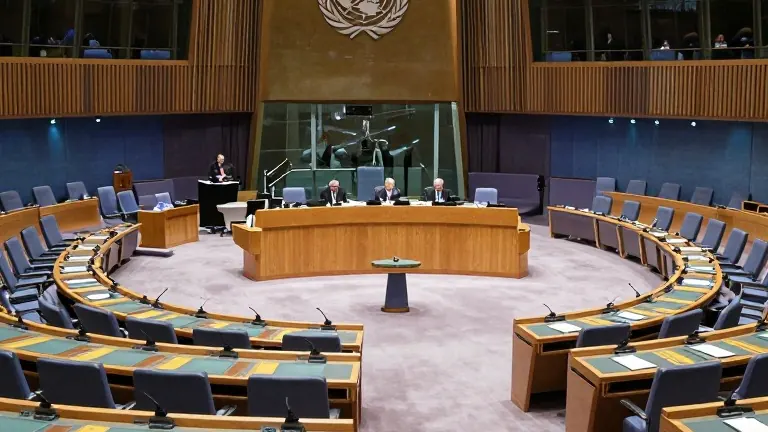
A 35-year United Nations peacekeeping mission in Western Sahara faces immediate expiration after the Security Council failed to pass either competing resolution on the territory's future. The diplomatic stalemate leaves the mission without a mandate beginning Saturday, a deadline that arrived without a last-minute agreement to extend or replace the operation.
On Friday, Russia cast a veto against a draft resolution introduced by the United States. The American text sought to end the current peacekeeping mission on April 30, 2027, and replace it with a new political mission that would not prepare for a referendum. The resolution stated that genuine autonomy under Moroccan sovereignty was the only feasible solution for a mutually acceptable outcome. This approach aligns with the Trump administration's recent support for Morocco, a position also held by Britain and France.
Following the veto, the council voted on a rival Russian draft intended to extend the existing peacekeeping mandate until October 31, 2027. The Russian proposal received three votes in favor and one against, with 11 members abstaining. Because the text did not reach the minimum threshold of nine affirmative votes required in the 15-member body, the United States did not need to exercise its own veto to defeat it.
The dispute centers on Western Sahara, a former Spanish colony annexed by Morocco in 1975. The conflict with the Polisario Front, which represents the indigenous Sahrawi people, led the U.N. to broker a ceasefire in 1991. The peacekeeping mission was established to monitor that truce and organize a referendum on the territory's future, a vote that has never occurred due to disagreements over voter eligibility. The region is known for its mineral resources and believed offshore oil deposits.
Sidi Omar, the Polisario Front's U.N. representative, criticized the American draft in a letter to the council dated October 22. He described it as an extremely dangerous departure from international law and the established peace process. Omar warned that adopting the U.S. resolution would trigger further tension and instability, forcing the Polisario Front to disengage from the peace process entirely.
Omar emphasized that the International Court of Justice has confirmed that sovereignty over Western Sahara belongs exclusively to the Sahrawi people. He cited their inalienable right to self-determination and independence. Russia and China have historically favored holding a referendum that includes independence as an option, contrasting with the autonomy-based plans supported by Morocco and several Western nations.