Dunkard Creek: Mussels Return After Decade-Long Absence
The Pennsylvania Fish and Boat Commission stocked 500 lab-raised bivalves into the stream in 2022, utilizing funds from pollution settlements to rebuild a critical filtering ecosystem.
By Isaac Medina ·
Freshwater mussels have returned to Dunkard Creek, a 38-mile waterway flowing through Greene County, Pennsylvania, and Monongalia County, West Virginia.
In October 2022, biologists from the Pennsylvania Fish and Boat Commission and volunteers stocked 500 mussels raised at the Union City Aquatic Conservation Center. These bivalves were the first to inhabit the stream since a mass die-off in September 2009, which eliminated all 14 local mussel species and most fish populations along a 30-mile stretch. The event was caused by a toxic bloom of golden algae, a phenomenon attributed to elevated salt concentrations in the water.
The 2009 disaster led to financial settlements that funded the mussel restoration effort. Consol Energy paid $5.5 million to West Virginia, and Murray Energy paid $2.5 million to the Pennsylvania Fish and Boat Commission after the commission sued for environmental damage and lost recreation. The commission used these funds to convert an aging fish hatchery in Union City, Erie County, into a specialized laboratory for propagating freshwater mussels.
Scott Ray, the commission's species recovery biologist at Union City, stated that the work represents a shift toward restoring entire ecosystems rather than just game fish. He noted that mussels are vital to this system, filtering up to 10 gallons of water per day per individual. However, reproducing these animals is complex, as female mussels must lure specific host fish to release their microscopic larvae, known as glochidia, into the fish's gills.
The restoration process requires collecting mature mussels from other streams, such as French Creek and the Shenango River, to begin the breeding cycle. Larvae typically require two years in specialized trays before they are large enough for stocking, with some species needing an additional summer in outdoor ponds to reach a one-inch diameter. In 2024, the Richard King Mellon Foundation awarded an $86,000 grant to the commission to expand this capacity. Ray indicated that the funding would allow the team to increase production by tens of thousands of mussels by improving pond-rearing systems and adding more trays.
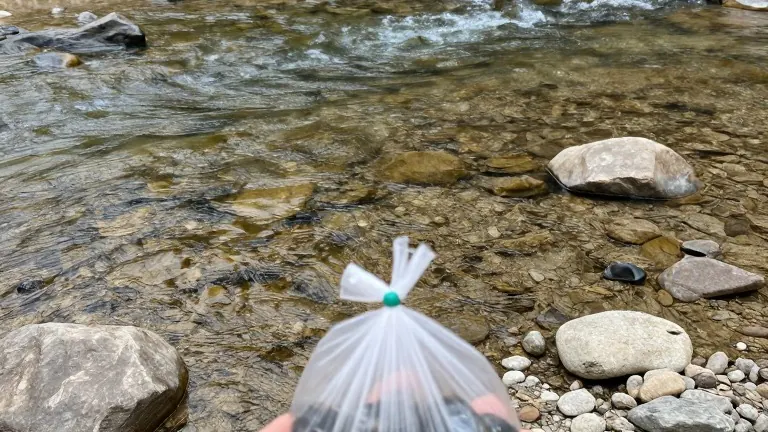
In September 2025, Ray and a dozen volunteers planted fatmucket and pocketbook mussels along a secluded stretch of the creek near Mt. Morris. The volunteers placed the animals on the creek bottom with their tapered ends down, a technique that allows the mussels to extend their feet and move. Each mussel was marked with glitter paint to facilitate future survival tracking.
The cause of the initial salt spike that triggered the 2009 algae bloom was never formally proven by federal or state agencies, though coal mine discharge, frack water disposal, and shale gas drilling were identified as potential contributors. No single entity admitted blame for the event.