Senate stakes: 13 races, 4-seat target, and the Mid-Atlantic vote
With polls open across the region, Democrats need a four-seat net gain to reclaim the majority, a hurdle complicated by deep red maps in 11 of the 13 battleground states.
By Isaac Medina ·
Voters across the United States are casting ballots on Tuesday to determine the balance of power in the U.S. Senate for the final two years of President Donald Trump's second term. 35 of the 100 Senate seats are up for election, including 33 regular races and two special elections for the remaining terms of former Florida Senator Marco Rubio and Ohio Vice President JD Vance. The current composition of the chamber stands at 53 seats for Republicans, 45 for Democrats, and two independent seats that caucus with the Democratic party. This structural advantage means the political math is steep for the minority party.
For Democrats to secure a majority in the new session beginning in January 2027, they must achieve a net gain of four seats. This requirement places significant pressure on the party, as Republicans can afford to lose only two seats to maintain their control. The outcome of this election is viewed as a referendum on the President's performance, with many voters expressing frustration over high prices and an unpopular war with Iran. 35 percent of U.S. Adults approve of Trump's job performance, while about seven in ten say the country is heading in the wrong direction.
Ballotpedia has identified 13 Senate races as battlegrounds, where the outcome is considered competitive. Eleven of these races are in states that Donald Trump won in the 2024 presidential election, creating a challenging environment for Democratic candidates. The ratings from major political analysts, including the Cook Political Report and Decision Desk, show that Maine is a toss-up on all four major trackers. Georgia, which Trump won by 2.2 percent in 2024, is rated as lean to likely Democratic. In Alaska, the race is rated as toss-up to lean Democratic, while Michigan and Iowa are rated as toss-up to lean Democratic or Republican respectively.
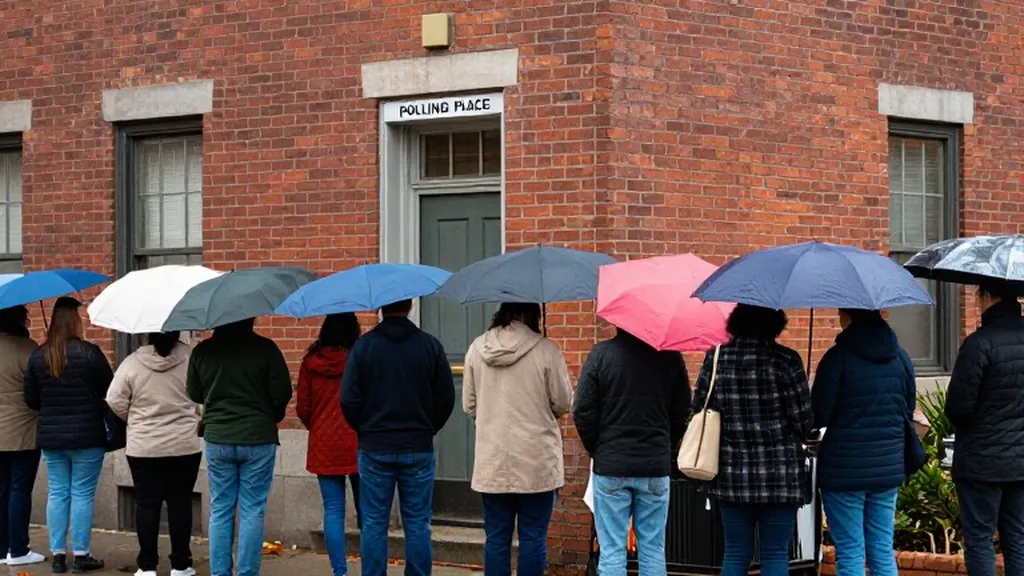
The Mid-Atlantic region offers a mixed landscape for the upcoming vote. In Delaware, polls are open from 7 a.m. To 8 p.m. For the Senate race featuring incumbent Democrat Chris Coons. In Virginia, where polls open at 6 a.m. And close at 7 p.m., incumbent Democrat Mark Warner faces a Republican opponent. Ballotpedia indicates that there are no Senate races in Pennsylvania or Maryland this cycle, as the next election for those seats is scheduled for a different year. However, these states are still critical for the overall midterm narrative, particularly with governor races featuring incumbents Josh Shapiro in Pennsylvania and Wes Moore in Maryland.
Financial dynamics are playing a significant role in the 2026 campaigns, which are projected to be the most expensive in history. Republican committees have outraised and outspent their Democratic counterparts, aided by Trump-affiliated groups and support from Elon Musk. Notably, 88.1 percent of Republican general election television ad spending has been directed to states and districts that Trump won in 2024. This includes more than 850 million dollars spent in areas where he won by 10 points or more, reflecting a strategy to consolidate support in red states.
Despite the financial disadvantage at the committee level, Democratic candidates have outraised their opponents at the individual candidate level. This funding edge is being used to target key battlegrounds such as North Carolina, where former Governor Roy Cooper is running against former Republican National Committee chair Michael Whatley. In Georgia, Senator Jon Ossoff is competing against Republican Representative Mike Collins. The Associated Press highlights that economic strain and tariffs have made states like Maine particularly competitive, where Senator Susan Collins faces Democratic challenger Troy Jackson.
The election also features several high-profile matchups in other battleground states. In Ohio, former Democratic Senator Sherrod Brown is running against incumbent Republican Senator Jon Husted in a special election. In Michigan, Democrat Abdul El-Sayed is facing Republican former Representative Mike Rogers, a race that has seen notable endorsements and shifting dynamics in the final days. In Texas, Republican Attorney General Ken Paxton is competing against Democrat James Talarico for the seat formerly held by John Cornyn, with Trump having backed Paxton in the primary.
Administrative challenges have also marked the final weeks of the election. A federal judge temporarily barred the Trump administration from implementing a plan to prevent noncitizen voting, a move critics argued could disenfranchise eligible voters. Additionally, the U.S. Postal Service has added extra hours and staff to ensure mail ballots are counted in a timely manner. These efforts are crucial as more than 57 million people had already voted before Tuesday, surpassing early vote totals from four years ago in many closely watched states.
Republican leaders are bracing for the possibility of losing the House while fighting to hold the Senate. RNC Chairman Joe Gruters emphasized that everything depends on turnout, stating that if they turn out their voters, they win. Conversely, Democratic House Leader Hakeem Jeffries has outlined a 100-day agenda focused on the cost of living and oversight, which would be prioritized if Democrats win control of either chamber. The results of this election will shape the legislative landscape for the remainder of the President's term.
Voters in the Mid-Atlantic are heading to the polls under specific local schedules. In Pennsylvania, polls are open from 7 a.m. To 8 p.m., while in Maryland they are open from 7 a.m. To 8 p.m. In Virginia, the window for voting is 6 a.m. To 7 p.m. In Delaware, polls are open from 7 a.m. To 8 p.m. As the day progresses, the focus remains on whether Democrats can overcome the structural hurdles of the 13 battleground races and the financial advantages of the Republican party to achieve their four-seat goal.