Governor races split 18 to 18 with 19 open seats
Midterm voters face a historic balance of power as Democrats seek their first majority of governorships in two decades.
By Anthony Shevchenko ·
Voters in 36 states cast ballots for governor on Tuesday, deciding a race that is precisely balanced between the two major parties. Republicans and Democrats each hold 18 of the governorships currently on the ballot. This even split creates a high stakes environment where a net gain of just two seats would allow Democrats to claim a nationwide majority for the first time since 2010.
The 2026 midterm cycle features an unprecedented number of open seats, with 19 governorships lacking an incumbent on the general election ballot. Fifteen of these governors are term limited and cannot seek another term. Additionally, Iowa Governor Kim Reynolds, Minnesota Governor Tim Walz, and Wisconsin Governor Tony Evers chose not to run for re-election. Rhode Island Governor Daniel McKee is the only incumbent to lose a primary, further opening the field for challengers.
Nine governor races are designated as battlegrounds by Ballotpedia, including Alaska, Arizona, Georgia, Iowa, Kansas, Michigan, Nevada, Ohio, and Wisconsin. In these states, the outcome is too close to call, and every vote counts in determining which party controls the executive branch. The Associated Press notes that Democrats are defending five governorships in states that Donald Trump won in 2024, including Arizona, Kansas, Michigan, Pennsylvania, and Wisconsin.
Conversely, Republicans are defending two governorships in states that Kamala Harris won in 2024: New Hampshire and Vermont. These defensive efforts are crucial for maintaining the status quo. In Pennsylvania, Governor Josh Shapiro faces a competitive race in a state that has become a central focus for both parties. In Michigan, the race is particularly tight, with the Associated Press noting that the state has become a key indicator of national political sentiment.
Georgia presents a notable matchup between Republican health care executive Rick Jackson and Democratic former Atlanta Mayor Keisha Lance Bottoms. They are competing to succeed Brian Kemp, who is term limited. In Nevada, Republican Governor Joe Lombardo faces Democratic Attorney General Aaron Ford. In Ohio, Republican Vivek Ramaswamy competes against Democrat Amy Acton, a race that has drawn attention due to campaign ads featuring Acton's estranged mother.
The Associated Press describes the election as a referendum on the cost of living, with many voters expressing frustration over high prices. AP-NORC polling indicates that 35 percent of U.S. Adults approve of President Trump's job performance, while only 25 percent approve of his handling of the economy. About seven in ten voters say the country is heading in the wrong direction, a sentiment that is driving turnout in the governor races.
Financial dynamics are also playing a significant role, as the 2026 elections are likely to be the most expensive in history. Republican committees have outraised and outspent Democratic committees at the committee level, helped by Trump affiliated groups and Elon Musk. However, at the candidate level, Democrats have outraised their opponents. This financial disparity is evident in advertising, with 88.1 percent of Republican general election TV ad spending going to states and districts that Trump won in 2024.
In the Mid-Atlantic region, the focus is on the governor races in Pennsylvania and Maryland. In Pennsylvania, Governor Josh Shapiro is seeking re-election in a state where polls are open from 7 a.m. To 8 p.m. In Maryland, Governor Wes Moore is also running for re-election, with polls open from 7 a.m. To 8 p.m. Both races are critical for Democrats, as losing either would significantly impact their chances of achieving a nationwide governor majority.
Voters in Virginia and Delaware do not have governor races on the ballot this year, but they are deciding Senate seats. In Virginia, polls are open from 6 a.m. To 7 p.m., and voters are deciding the fate of incumbent Senator Mark Warner. In Delaware, polls are open from 7 a.m. To 8 p.m., and voters are choosing between candidates for the seat held by incumbent Senator Chris Coons. These Senate races are part of the broader fight for control of the U.S. Senate.
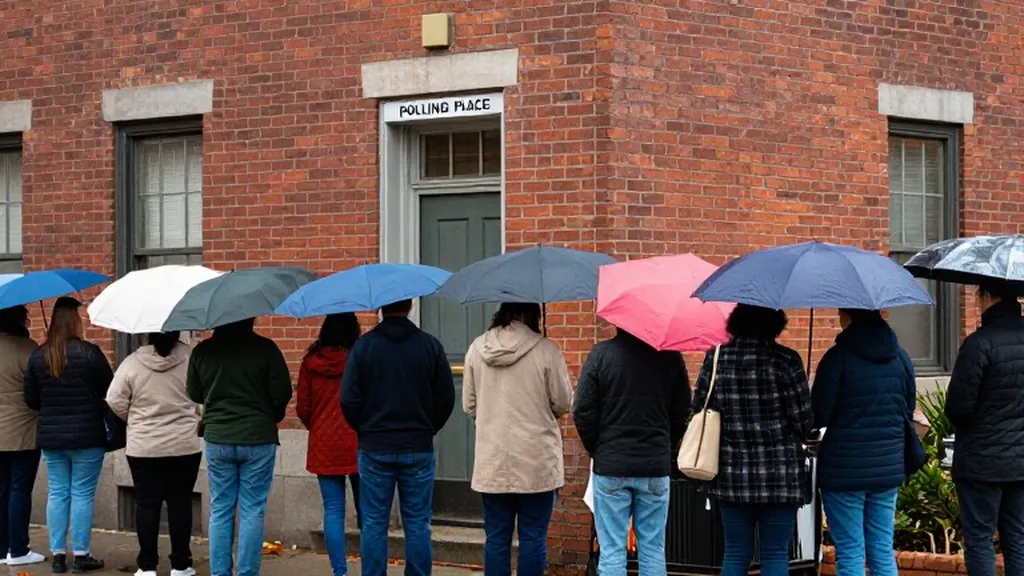
More than 57 million people had already voted as of Monday, surpassing the early vote of four years ago in many closely watched states. This high level of early voting suggests strong engagement among voters who are concerned about the direction of the country. As polls open, the focus shifts to who will turn out on Election Day to cast their final vote in this historic balance of power.
RNC Chairman Joe Gruters stated that everything depends on turnout, emphasizing that if Republicans turn out their voters, they will win. DCCC Chair Rep. Suzan DelBene countered that the American people are angry and want change. Voter James Moore, a 57-year-old librarian in Raleigh, North Carolina, said he is paying more taxes and more for healthcare, reflecting the economic concerns driving many voters to the polls. The outcome of these 36 governor races will set the tone for the next two years of state leadership.