Herndon Pursues State Program to Jumpstart Downtown Revitalization
Town council authorized staff to apply for Virginia Main Street status, aiming to secure grants and technical help for a new nonprofit that will manage the historic district.
By Beatriz Soto ·
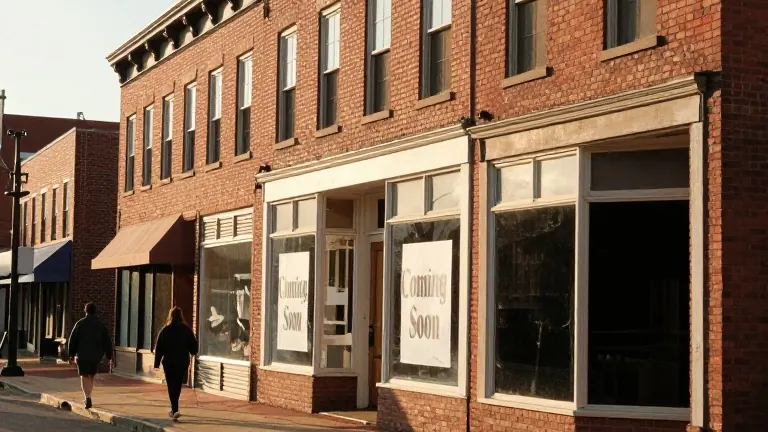
Herndon officials have moved to join a state revitalization program, seeking to inject new energy into the town’s historic core without waiting for private developers to act. On Tuesday, October 27, the Herndon Town Council authorized staff to submit an application for inclusion in Virginia Main Street, a resource provided by the Virginia Department of Housing and Community Development.
The program is designed for communities looking to boost their commercial districts. If approved, Herndon would become the first locality in Fairfax County to participate. It would also be one of only a few in Northern Virginia to join. The town has been dealing with vacant lots and empty storefronts for some time, which has raised concerns about economic stagnation in the area.
Staff evaluated several options before selecting this path. Models like a business improvement district or a partnership similar to the Southeast Fairfax Development Corporation were considered. However, Collin Okoniewski, the town’s economic development manager, identified the Main Street program as the most promising approach. It offers technical assistance, grants, and training seminars specifically for pedestrian-oriented areas. Although Herndon does not have a literal main street, Okoniewski noted the downtown core is compact enough to meet eligibility criteria.
“It’s been a long time coming,” Okoniewski said during an October 6 work session. “We’ve been working with businesses and working with citizens about how to coalesce around a shared vision, a shared buy-in for our downtown exclusively.” He emphasized that the local business sector consists largely of small, locally owned enterprises rather than large chains.
The Main Street program was established in 1985 and has typically seen more participation in rural areas. Leesburg joined at the end of 2024, and the Columbia Pike Partnership in Arlington has explored the possibility. Okoniewski stated that Herndon would be the furthest into the core of Washington, D.C., and that the state is optimistic about testing the model in an urban and suburban setting.
Before presenting the proposal to the council, staff gained backing from the Downtown Early Action Plan Committee. Once accepted, the town would gain immediate access to resources, including grant funding. This money would help establish a community-led, independent nonprofit to oversee future initiatives. These initiatives would include business support, marketing, events, and physical improvements.
Marjorie Sloan, the town’s Director of Finance, told the council that seed money is required to start the nonprofit because no existing group is currently performing this work. She suggested considering this initial financing in the fiscal year 2028 budget, which will be proposed early next year and take effect on July 1. The plan involves the town phasing out its funding over time as the nonprofit becomes self-sustaining through fundraising and other revenue sources. Councilmember Cesar del Aguila stressed the need to include all downtown businesses and stakeholders in the process. Okoniewski said the town will be intentional about ensuring representatives from different communities are involved.