Smotrich's 40-settlement plan complicates vote for 20% of Israelis
Palestinian citizens face a dilemma as a rightward shift threatens their rights, and their own party's past coalition performance offers little proof that voting changes policy.
By Isaac Medina ·
Finance Minister Bezalel Smotrich unveiled a plan in August to establish 40 new settlements in the Naqab and northern Israel. The proposal aims to add one million Jewish residents to these regions through new settlements, farms, and housing units. This move extends the model of territorial control from the West Bank into areas where Palestinian communities are concentrated.
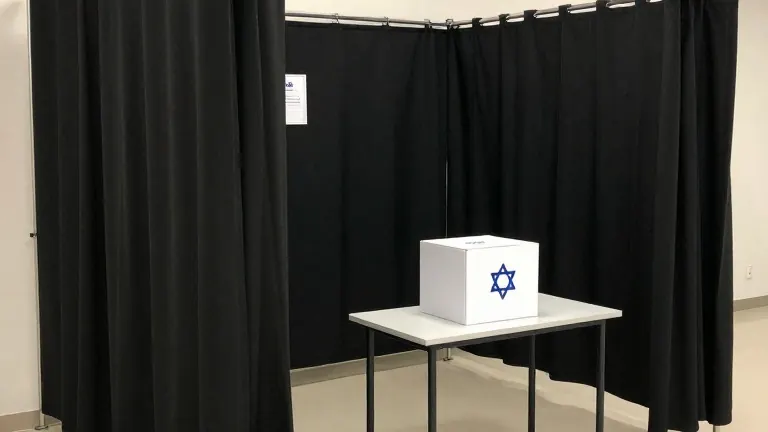
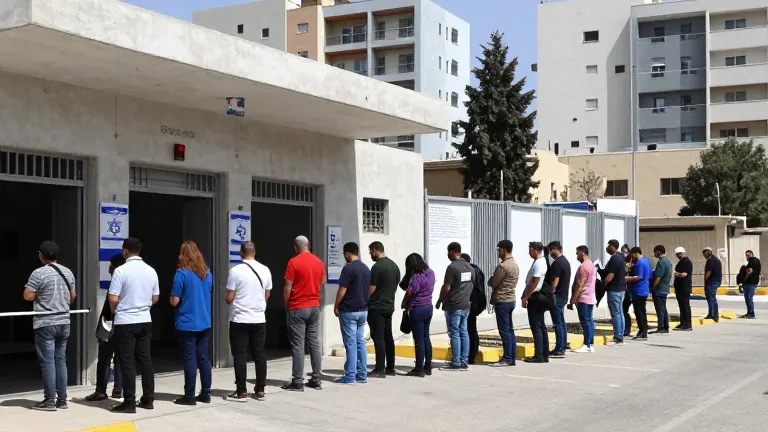
For the two million Palestinian citizens of Israel, who make up 20 percent of the population, the general election on October 27 presents a distinct challenge. The political mainstream is shifting to the far right, bringing with it increased violence and settler encroachment. Many citizens question whether voting can alter these conditions.
Since receiving citizenship in 1952, Palestinian citizens have faced discriminatory laws and systemic underfunding. The state has often outsourced security to criminal networks, leading to killings and arson that law enforcement has largely ignored. Organised crime groups have recently obtained advanced weapons, reportedly stolen from army stockpiles or smuggled across borders. This militarisation of organised crime has claimed hundreds of lives.
Settler expansion has accelerated since October 2023. Religious-nationalist groups began establishing themselves in Palestinian neighbourhoods in mixed cities like Jaffa and Lydd in 2021. The process of recolonisation now targets the Naqab and the north, where land seizure is expanding alongside new housing projects.
National Security Minister Itamar Ben-Gvir has widened access to personal firearms, issuing 300,000 gun licences since taking office. He is also developing a National Guard, a force prompted by the May 2021 protests known as the Dignity Uprising. The guard’s potential deployment against mass protests raises concerns about the right to protest and the protection of democratic freedoms.
Mansour Abbas, leader of the United Arab List (Ra’am), has long argued that supporting the anti-Netanyahu camp can halt the settler-colonial agenda. However, the party’s track record challenges this premise. Ra’am joined a coalition government in 2021 that excluded Netanyahu but failed to bring about fundamental changes for Palestinian citizens.
In 2022, Ra’am member Mazen Ghnaim publicly acknowledged that he could not push through policies benefiting the Palestinian population despite his party being in the ruling coalition. He noted the heavy criticism he faced when visiting Palestinian communities. This experience illustrated the difficulty of sustaining political participation in a government whose other parties uphold exclusionary nationalist policies.
The author of the analysis plans to vote in Tuesday’s election, believing that four more years of far-right rule poses an immediate threat. However, electoral participation must be accompanied by a more radical political response. This requires reforming the High Follow-Up Committee and rooting it more firmly in Palestinian society through grassroots organising.