Netanyahu and Eisenkot Face Stalemate in Tight Israeli Election
Exit polls indicate neither leader holds a majority, forcing weeks of coalition negotiations as final counts await Wednesday.
By Anthony Shevchenko ·

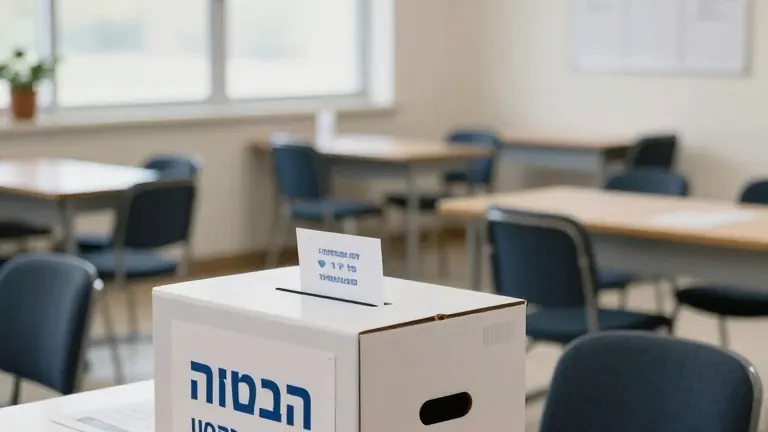
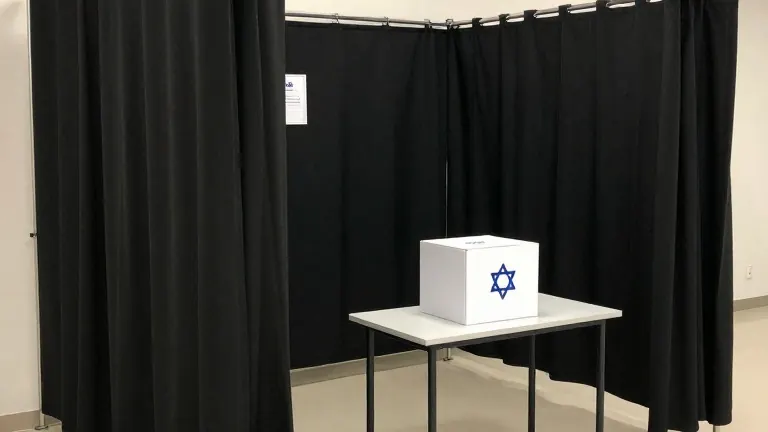
Exit polls released after polls closed at 10 p.m. local time on Tuesday indicate that neither Prime Minister Benjamin Netanyahu nor his challenger Gadi Eisenkot has secured a majority to form a government. The race between the incumbent and the former military chief of staff appears tight, with no clear winner emerging from the initial data.
This is the first general election held since the Hamas attack on southern Israel on October 7, 2023. It also follows the 12-day war against Iran in 2025 and the joint U.S.-Israeli campaign launched in February 2026. Final results are not expected until Wednesday afternoon. Once the numbers are in, President Isaac Herzog will consult with party leaders to determine who receives the mandate to form a government. Netanyahu will remain caretaker prime minister during the negotiation period, which can last several weeks.
Netanyahu leads the right-wing Likud party and heads the governing coalition. He was first elected in 1996 and served from 2009 to 2021. He returned to office in 2022 while facing charges of bribery, fraud, and breach of trust. His opponents, led by Eisenkot and the centrist Yashar party, argue that Netanyahu failed to prevent the October 7 attack and has not achieved key war goals, such as dismantling Hamas in Gaza.
The campaign was heavily focused on security and foreign policy. Israeli forces remain engaged in conflicts in Gaza, Lebanon, Syria, Iran, and the West Bank. In Gaza, the Hamas-run Health Ministry reported at least 74,555 deaths as of the election. The October 7 attack killed approximately 1,200 Israelis. In response to the war, Israel conducted extensive operations in Lebanon, killing Hezbollah leader Hassan Nasrallah and seizing border territory.
Netanyahu framed the election as a choice between security and existential danger. He posted on X that Israel's enemies want the country to lose and described the opposition as dangerous and left-wing. He also criticized the Arab-Israeli parties, which represent about one-fifth of the population, using the slogan "The Right or Palestine." Eisenkot countered that Netanyahu would stop at nothing to stay in power, including using lies and extreme measures.
Domestically, the debate included military exemptions for the ultra-Orthodox community and judicial reforms that sparked protests in 2023. Opposition figures criticized the government for its handling of the West Bank, where Israeli settlements expanded and Palestinian communities faced displacement. Finance Minister Bezalel Smotrich and Security Minister Itamar Ben-Gvir advocated for stricter measures against Palestinians.
Arab-Israeli leaders urged their voters to turn out in large numbers. Ahmad Tibi, leader of the Ta'al party, stated on X that he was determined to bring down the current government. He predicted that Arab voters would flock to polling stations to remove what he called the destruction government.
Reports emerged in the final days of the campaign about tensions between Netanyahu and IDF Chief of Staff Eyal Zamir. The friction reportedly stemmed from Netanyahu's push to resume strikes on Iran before the vote. Netanyahu denied the reports on X, calling them fake news and confirming he had no intention of removing Zamir. He said he intended to remove the Iranian nuclear threat permanently alongside U.S. President Donald Trump.
Trump endorsed Netanyahu in a social media post this week, praising their relationship and referring to Netanyahu as an outstanding Warrior Prime Minister. Trump said the two had won together in their joint operations against Iran. He added that if Israel had the wrong leader, it would be anyone other than Bibi, and urged voters to choose Netanyahu to finish the job started by the U.S. and Israel.
Eisenkot and his bloc also support continued military pressure on Iran and its allies, including Hezbollah, Iraqi militias, and the Houthis in Yemen. In Gaza, Eisenkot said he has no plans for an Israeli retreat and wants to eliminate Hamas while keeping the IDF in the territory. He has pledged to use the military to rein in violent settler groups in the West Bank, a point of criticism against Netanyahu's government.